An anal fissure surgery is a proctological condition that significantly reduces the quality of life, causing intense pain during bowel movements, often described by patients as feeling like passing broken glass. While it can be treated with creams, warm sitz baths, and dietary changes in the acute (newly developed) phase, surgical intervention becomes the safest and most permanent solution when the condition fails to heal and becomes chronic. In our clinic, we manage this process using minimally invasive methods that preserve the patient’s anal anatomy and maximize postoperative comfort.
Is chronic anal fissure surgery necessary?
If anal fissure complaints persist for more than 6-8 weeks, the tear has evolved into a “chronic anal fissure.” At this stage, a severe muscle spasm (contraction) develops in the anal region. Because the muscle spasm reduces blood flow to the area, it prevents the tear from healing on its own. To break this vicious cycle where medical treatments (medications, diet, sitz baths) are ineffective, eliminate the pain, and ensure tissue healing, surgery is generally necessary for chronic cases.
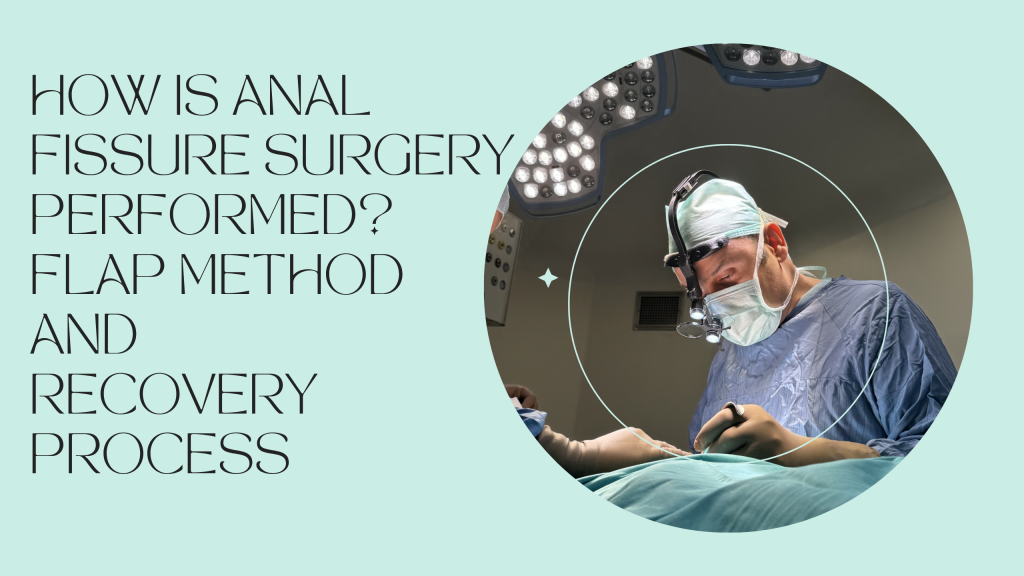
How is anal fissure surgery performed with the flap method?
The core philosophy of our clinic in anal fissure surgery is to adopt a sphincter-saving (preserving the anal muscles) approach. The flap method is a procedure where the cracked area inside the anus is closed by advancing completely intact and healthy tissue from the immediate vicinity over the fissure.
Depending on the severity of the disease and the individual’s anatomical structure, we can plan and apply a different flap technique for each patient. The greatest advantage of this method is that the underlying muscles responsible for bowel control are not cut; only the tear is covered with healthy tissue. Thus, the anatomy is not disrupted, providing a treatment that perfectly suits physiological functions.
How long does anal fissure surgery take?
Although operations performed using the flap method vary slightly depending on the patient’s condition and the preferred anesthesia, they are typically completed in a short time, averaging 45 to 60 minutes. Following the procedure, our patients can rest in their rooms for a while and be discharged on foot the same day or the following day.
Is there pain after anal fissure surgery?
Thanks to advanced surgical techniques, the postoperative recovery period is highly comfortable. Because the anal muscles (sphincter) are not touched unless absolutely necessary in the flap technique, our patients do not experience that old, fearful tearing pain during their first bowel movement after surgery. Any mild aching or sensitivity that may occur in the treated area can be easily controlled with standard painkillers.
Is anal fissure surgery risky?
The complication patients fear most in classic surgeries (LIS – lateral internal sphincterotomy, or muscle cutting) is irreversible damage to the anal muscles and the subsequent risk of gas or stool incontinence. However, the flap method, which we prioritize in our treatment protocol, is a muscle-preserving procedure. Because the muscles are treated with extreme care, risks such as gas or stool leakage are close to zero with this method.
Recovery time after anal fissure surgery
Because the flap technique supports the body’s natural repair mechanism, it significantly accelerates the recovery process. Our patients can usually return to their normal daily routines, social lives, and desk jobs a few days after the operation. Although it takes a few weeks for the healthy tissue advanced to the anus to fully fuse, this does not restrict the patient’s daily life. The most important condition to guarantee healing during this period is consuming high-fiber foods, drinking plenty of water, and absolutely avoiding diarrhea or constipation.
Anal fissure surgery prices
Anal fissure surgery prices vary depending on the depth of the tear, whether there is an accompanying proctological problem (such as hemorrhoids, prolapse, or stricture), the type of anesthesia to be applied, and the medical equipment of the surgical center. Since the flap tissue selected for each patient’s treatment will differ, you can contact our clinic through our communication channels to get the most accurate, personalized treatment plan and pricing information.