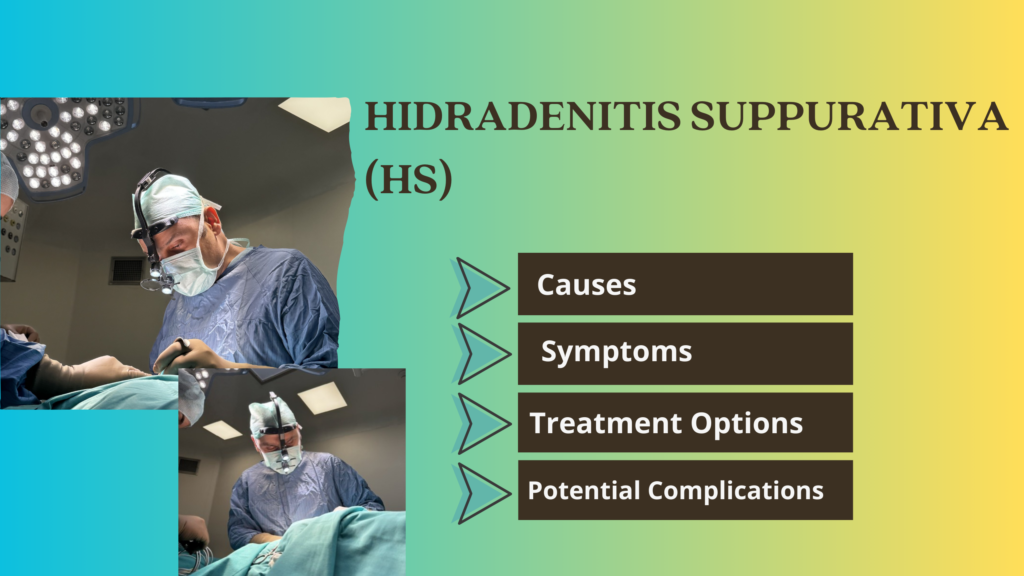
Hidradenitis Suppurativa (HS), commonly known as “acne inversa” or the “boil-like disease”, is a chronic, recurrent inflammatory skin condition that develops in areas rich in hair follicles and sweat glands. The disease most commonly affects the armpits, groin, buttocks, perianal region, and under-breast areas. HS may progress over time, leading to painful nodules, abscesses, persistent drainage, fistula formation, and permanent scarring.
Because the disease significantly affects daily comfort and social life, early diagnosis and tailored treatment are crucial to prevent long-term complications.
What Causes Hidradenitis Suppurativa?
Although the exact cause of HS is not fully understood, current evidence suggests that the condition results from follicular occlusion followed by chronic inflammation.
1. Follicular Blockage
- HS typically begins with blockage of the hair follicle.
- The follicle swells and ruptures, triggering an inflammatory response in the surrounding tissue.
- This process creates a vicious cycle of nodules, abscesses, and sinus tracts.
2. Genetic Predisposition
- Approximately 30–40% of patients have a family history of HS.
3. Hormonal Factors
- HS usually appears after puberty.
- Its higher prevalence in women suggests hormonal influence.
4. Obesity and Smoking
- Obesity increases friction and moisture, worsening symptoms.
- Smoking is one of the most well-established risk factors for HS.
5. Dysregulated Immune Response
- Overactivation of the body’s inflammatory pathways contributes to chronicity and tissue destruction.
What Are the Symptoms of Hidradenitis Suppurativa?
HS can present with a wide range of symptoms. Common clinical features include:
1. Painful Red Nodules
- Firm, tender lumps often located in the armpits or groin.
2. Rapid Progression to Abscesses
- Nodules may soften over time and develop into pus-filled abscesses.
3. Recurrent Episodes
- Lesions tend to recur in the same anatomical regions.
4. Sinus Tracts (Fistulas)
- Chronic inflammation may lead to tunnel-like tracts under the skin.
5. Persistent, Foul-Smelling Drainage
- Drainage can significantly impact daily activities and social relationships.
6. Skin Thickening and Scarring
- Long-term disease causes fibrotic bands and permanent scarring.
Treatment Options for Hidradenitis Suppurativa
Treatment is tailored according to the severity and stage of the disease. The primary goals are to control inflammation, reduce flare-ups, prevent new lesions, and improve quality of life.
1. Lifestyle Modifications
- Smoking cessation
- Weight loss
- Wearing loose-fitting clothing to reduce friction
- Gentle skin-care routines that avoid irritation
2. Medical Therapy
- Topical antibiotics for mild disease
- Oral antibiotics for moderate or widespread lesions
- Immunomodulatory medications
- Biologic therapies (anti-TNF agents) for moderate–severe HS, shown to significantly reduce disease activity
3. Minimally Invasive Procedures
- Incision and drainage of abscesses
- Removal of inflamed sinus tracts
- Selected laser-based treatments for suitable cases
4. Surgical Treatment
Surgery is often the most effective option for chronic, recurrent, or extensive disease.
- Local excision of affected tissue
- Wide excision followed by reconstruction
- Surgical removal provides long-term symptom relief in advanced cases
What Happens If Hidradenitis Suppurativa Is Not Treated?
If left untreated, HS may lead to significant long-term complications such as:
- Recurrent skin infections
- Large abscesses and sinus tracts
- Persistent, foul-smelling drainage
- Physical and emotional distress
- Extensive scarring and skin deformity
- Reduced mobility due to pain
- Rarely, in severe longstanding disease: squamous cell carcinoma
Early intervention greatly reduces the risk of complications.
Conditions Associated with Hidradenitis Suppurativa
HS may occur together with several systemic conditions:
- Metabolic syndrome
- Obesity
- Type 2 diabetes
- Polycystic Ovary Syndrome (PCOS)
- Inflammatory bowel diseases (especially Crohn’s disease)
- Acne and other follicular disorders
- Depression and anxiety due to chronic pain and social difficulties
A multidisciplinary approach often helps achieve better disease control.
Hidradenitis Suppurativa is a chronic and often misunderstood disease that can significantly affect physical and emotional well-being. With early diagnosis, appropriate medical therapy, and—when necessary—surgical intervention, it is possible to greatly reduce symptoms, prevent complications, and improve long-term outcomes.