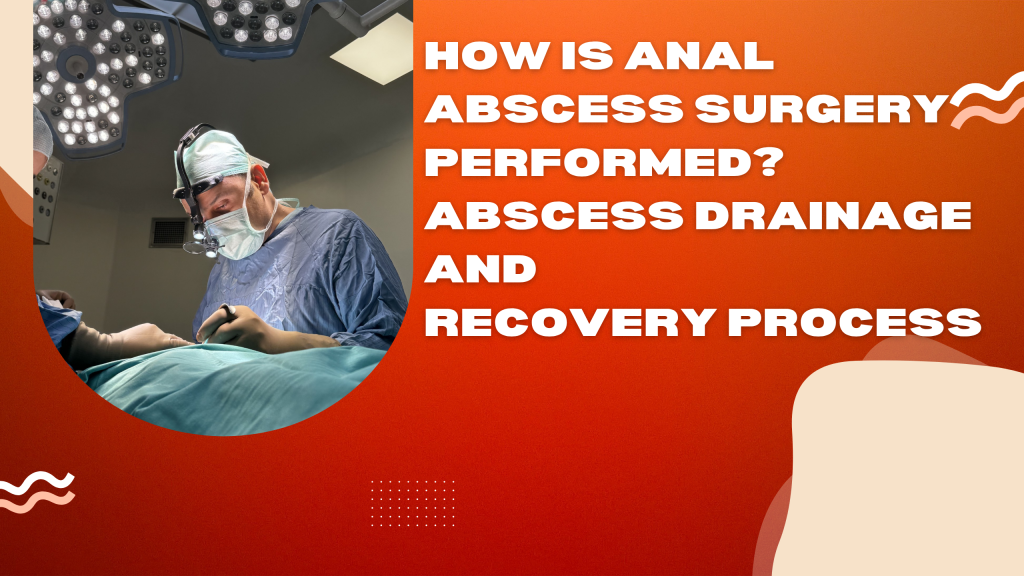
Anal abscess (perianal abscess) is an emergency proctological condition characterized by severe pain, swelling, and fever, resulting from the blockage of secretory glands in the anal canal. In this clinical picture, the only definitive solution is the surgical evacuation of the abscess without losing time. Waiting or relying solely on antibiotics can cause the inflammation to spread between tissue layers, leading to more complex problems.
How is anal abscess surgery performed?
The treatment for an anal abscess is an evacuation procedure known as “drainage.” During this procedure, a small incision is made at the point where the abscess is most swollen, allowing the accumulated inflammation to be completely discharged. Our primary approach in our clinic is not just to drain the external swelling but to reach the source of the abscess and clean the internal pockets (loculations). A sphincter-preserving surgical technique is applied to ensure no damage is done to the surrounding tissues, especially the anal muscles (sphincter). To prevent the re-accumulation of inflammation, a small drain (a rubber apparatus) may sometimes be placed in the drainage area.
Does the abscess drainage procedure hurt?
An anal abscess causes unbearable pain for the patient due to high pressure within the tissue. Since the drainage procedure is performed under anesthesia (usually local or sedation), the patient feels no pain during the operation. The real relief occurs the moment the abscess is drained and the intense pressure in the tissue is eliminated. Our patients often report that their throbbing and severe pain subsides by 80-90% as soon as they get off the operating table.
How many minutes does anal abscess drainage take?
Depending on the size and depth of the abscess, the drainage procedure is typically completed in a very short time, ranging from 10 to 15 minutes. As it is an emergency intervention, patients are quickly taken into the procedure upon applying to our clinic and can return home on foot after a short period of rest following the drainage.
Recovery after perianal abscess drainage
The recovery process after the procedure is quite rapid. The incision site where the abscess was drained is usually not sutured; this allows any remaining inflammation to continue flowing out. The most important elements in the recovery process include:
- Warm Water Sitz Baths: These accelerate healing and ensure cleanliness by increasing blood circulation in the area.
- Dressing and Hygiene: It is critical to perform dressings as recommended by your doctor for the first few days and to keep the area dry.
- Return to Daily Life: Patients can usually return to work and their normal routines the day after the drainage.
Does an anal abscess recur?
Once an anal abscess is properly drained, the risk of an abscess re-forming at the same spot is low. However, as a medical reality, there is approximately a 40-50% risk of developing a Fistula following any drained anal abscess. If persistent discharge or hardness remains in the area after the abscess has been drained, it may indicate the formation of a fistula. In the drainage procedures performed at our clinic, a meticulous cleaning and follow-up protocol is applied to minimize the risk of future fistula development.