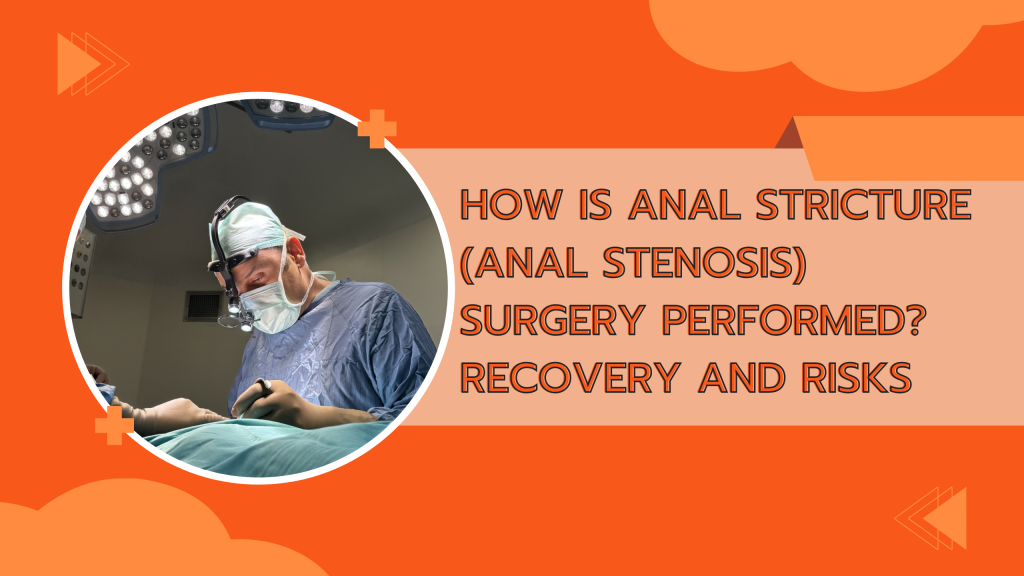
Anal stricture (anal stenosis) is a condition where the anal canal loses its elasticity and narrows, making the act of defecation extremely painful and difficult. Usually developing after improperly performed surgeries or non-healing anal fissures, this condition severely impairs patients’ quality of life. In our clinic, we solve this problem with advanced flap techniques that expand the narrowed area and restore healthy tissue to the region.
How is anal stricture surgery performed?
The primary goal in anal stricture surgery is to relax the narrowed and hardened tissue, restoring the anal diameter to its normal physiological size. Since simply cutting the narrowed area (sphincterotomy) or dilation is often insufficient, we shift healthy and elastic skin tissue from just outside the anus to the narrowed area using the flap technique. This ensures a permanent expansion by adding fresh, living tissue to the anal canal.
Is anal stenosis surgery difficult?
Anal stenosis surgery is one of the most delicate operations in proctology, requiring specialized expertise. Accurately analyzing the level of stricture and placing the healthy tissue (flap) to be transferred in a way that preserves its vitality takes experience. However, when performed by expert hands with the right technique, it is a highly gratifying procedure that eliminates the difficulty of defecation the patient has suffered for years in a single day.
How long does anal stricture surgery take?
The duration of anal stricture surgery varies depending on the severity of the stricture and how many different areas the flap will be shifted from, but it is typically completed in an average of 60 to 90 minutes.
Is there pain after anal stricture surgery?
The long-standing difficulty of “passing stool through a narrow canal” and the resulting sensation of tearing disappear immediately after the surgery. In the expansion procedure performed with the flap method, the anal muscles are not damaged. The ache felt after the operation is minimal and can be easily controlled with standard painkillers.
Is anal stricture surgery risky?
In traditional dilation methods, the risk of the stricture recurring (relapse) is high. In addition, there may be a risk of gas or stool incontinence with uncontrolled incisions. However, the flap method we apply is a completely sphincter-preserving (muscle-preserving) procedure. Since no incisions are made in the muscles, the risk of fecal incontinence does not occur with this method.
Recovery process after anal stricture surgery
The most critical stage in the recovery process is avoiding diarrhea or constipation. A high-fiber diet and plenty of water consumption are vital for the shifted flap tissue to successfully fuse and heal into the area. Our patients usually stay in the hospital for 3 days and can return to their light daily routines within a week. Paying careful attention to hygiene after using the toilet (gentle cleaning with warm water) accelerates the healing process.
Anal stricture surgery prices
Anal stricture surgery prices are determined by the stage of the stricture, how much of the anal circumference the stricture affects, and how many flaps will be utilized. You can reach out to us through our communication channels for the most accurate pricing information and a personalized surgical plan tailored to you.