What Is a Perianal Abscess?
A perianal abscess—commonly known as an “anal abscess”—is an acute infection in the anal region characterized by sudden and severe pain, swelling, and redness. Medically, it is described as an anal abscess or, more broadly, an anorectal abscess.
A perianal abscess occurs when the glands around the anal canal become blocked and infected. Without timely treatment, the infection can spread to deeper tissues, affect neighboring anatomical spaces, and cause systemic symptoms such as fever. In severe cases, the infection may enter the bloodstream and lead to sepsis, a life-threatening condition.
Signs and Symptoms of a Perianal Abscess
Common perianal abscess symptoms include:
- Severe anal pain: Initially mild but rapidly intensifying, often making sitting and bowel movements difficult.
- Swelling and redness around the anus: A firm, palpable lump may be noticeable.
- Fever, fatigue, chills: Signs of systemic infection as the abscess progresses.
- Pus or discharge from the anus: Occurs when the abscess spontaneously ruptures.
- Increased pain during bowel movements: Reported frequently in patient reviews and clinical observations.
If these symptoms appear, it is crucial to consult a general surgeon or proctologist without delay.
What Causes a Perianal Abscess?
Most perianal abscesses develop when small glands located near the dentate line of the anal canal become obstructed, allowing bacteria to accumulate and form pus.
Common Causes
- Blocked anal glands: Due to constipation, diarrhea, or foreign bodies.
- Large or hard stool obstructing gland ducts.
- Crohn’s disease: The most common inflammatory bowel disease associated with anal abscesses; 10–20% of patients develop anorectal abscesses or fistulas.
- Ulcerative colitis, tuberculosis, anal cancer: Less frequent but important causes.
- Infection of anal fissures or hemorrhoids.
- Post-procedural infections: Rarely occurring after local anesthesia injections or enemas.
Uncommon Causes
- Infection following rupture of a thrombosed hemorrhoid
- Trauma to the anal region or complications after anorectal procedures
Types of Anal Abscesses
A perianal abscess may occur in different anatomical locations, each with specific clinical features and treatment approaches.
1. Perianal Abscess
- The most common type
- Located beneath the skin around the anus
- Presents with visible swelling and severe pain
2. Intersphincteric Abscess
- Occurs between the internal and external anal sphincters
- Low type: Extends toward the anal verge, causing marked pain and swelling
- High type: Extends toward the rectum; may be harder to diagnose
3. Ischiorectal Abscess
- Develops in the ischiorectal fossa, usually posteriorly
- Spreads along the external sphincter and may form a horseshoe abscess
4. Supralevator Abscess
- Located between the rectum and the levator ani muscle
- Rare and often originates from upward extension of an infection near the dentate line
- May also result from diverticulitis, ulcerative colitis, or Crohn’s disease
- Diagnosis often requires advanced imaging
How Is a Perianal Abscess Diagnosed?
Physical Examination
Most perianal abscesses can be diagnosed through clinical evaluation:
- Severe anal pain that worsens over time
- Redness and swelling around the anus (surface abscesses)
- Digital rectal examination: Detects tenderness or fullness in deeper abscesses
- May be confused with anal fissures or thrombosed hemorrhoids; careful assessment is essential
Imaging Studies
Imaging is required in deep or complex cases:
- Ultrasound (endoanal or perianal): Helps detect abscesses but may be limited for supralevator infections
- MRI: The most accurate tool for assessing size, location, and spread—ideal for recurrent or complicated abscesses
- CT scan: Useful for suspected supralevator abscesses or widespread infections
How Is a Perianal Abscess Treated?
1. Incision and Drainage (I&D)
- The gold-standard treatment for perianal abscesses
- Performed under local anesthesia for superficial abscesses; deeper or larger abscesses may require spinal or general anesthesia
- The entire infected cavity must be drained adequately
- A drain may be placed in large or complex abscesses
- Antibiotics may be given in specific cases
2. Antibiotic Therapy
Antibiotics alone are not effective for treating an abscess.
They are reserved for:
- Immunocompromised patients
- Widespread infection
- Postoperative supportive therapy
3. Preventing Fistula Formation
- Up to 40% of patients may develop an anal fistula after an abscess
- Some surgeons identify the fistula tract during drainage and perform a fistulotomy
- However, due to the risk of sphincter injury and incontinence, most prefer to drain the abscess first and treat a fistula later if it develops
4. Seton Placement
- Not a first-line treatment for abscesses
- Used primarily for managing fistulas
Possible Complications After Abscess Surgery
- Bleeding: Occurs in 1–2% of procedures
- Urinary retention: Rare, mostly after spinal anesthesia
- Recurrent abscess: May occur with delayed treatment or insufficient drainage
Special Situations
1. Perianal Abscess in Infants and Children
- Usually treated with simple drainage
- Rarely progresses to fistula formation
- Recurrent cases may require further intervention
2. Immunocompromised Patients
- Higher risk in leukemia, lymphoma, AIDS, and patients with neutropenia
- Infections are more severe and extensive
- Require aggressive, multidisciplinary treatment
3. Necrotizing Anorectal Infection (Fournier’s Gangrene)
- Rapidly progressing, life-threatening infection
- Symptoms: severe perineal pain, swelling, fever, chills, and extensive tissue inflammation
- Common in men around age 50 with diabetes, obesity, alcoholism, or immune deficiencies
- Treatment requires immediate surgical debridement and broad-spectrum antibiotics
Conclusion
A perianal abscess is a surgical emergency that must be treated promptly. Early diagnosis and rapid drainage significantly reduce complications and protect long-term quality of life. Regular follow-up is crucial to prevent recurrence and identify fistula formation early.
Frequently Asked Questions (FAQ)
What causes a perianal abscess?
Blocked and infected anal glands, Crohn’s disease, foreign bodies, or trauma.
Is a perianal abscess an emergency?
Yes. It requires urgent surgical drainage and should not be delayed.
Can a perianal abscess be treated at home?
No. An abscess must be drained in a sterile clinical setting.
Can a perianal abscess turn into cancer?
No. An abscess does not turn into cancer, but certain cancers may present with abscess formation.
How is perianal abscess surgery performed?
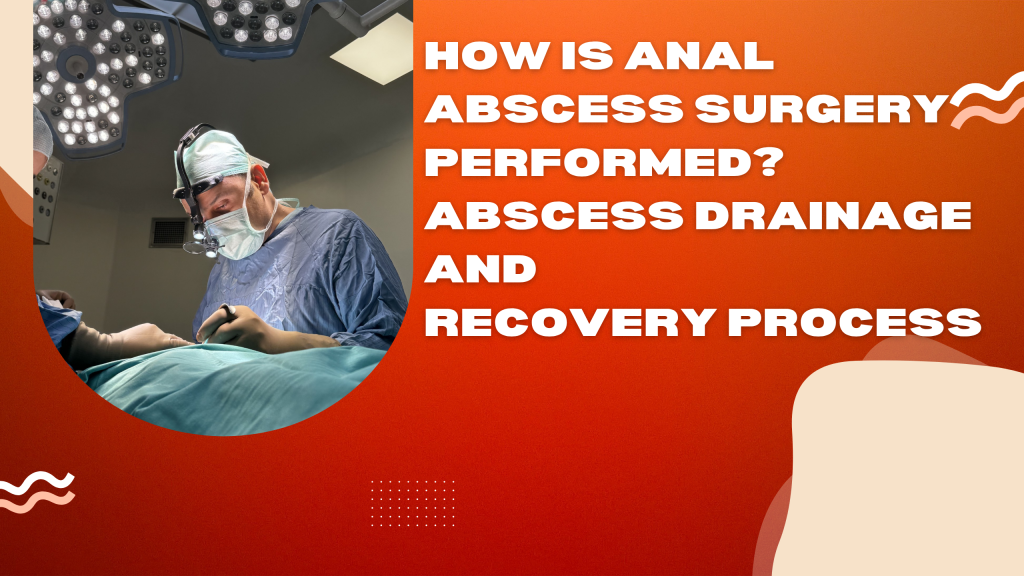
A small incision is made to drain the pus; a drain may be placed if necessary. Local or general anesthesia may be used.
How long does it take to heal?
Pain and swelling typically decrease within 7–10 days after drainage, but full healing may take longer.
Can an abscess be drained with a needle?
It is possible for small superficial abscesses, but surgical drainage is safer and more effective.
Do creams work for perianal abscess?
No. Creams cannot treat an abscess but may help with temporary pain relief.
Is diagnosis difficult?
Superficial abscesses are easy to diagnose; deeper abscesses may mimic flu-like illnesses and require imaging.
What causes inflammation around the anus?
Abscesses, fistulas, ulcerative colitis, or rectal prolapse.
Does a perianal abscess heal on its own?
Most do not. Some may rupture spontaneously, but deeper abscesses require medical treatment and delaying care can worsen outcomes.
Can antibiotics cure a perianal abscess?
They may reduce symptoms in very early or small abscesses, but large or advanced abscesses require immediate drainage.